“Coronavirus” the most heard, talked and shared word of 2020 till date.
What is coronavirus? the whole world wants to know.
The coronavirus disease (COVID-19) is an infectious disease caused by a virus of the family Coronaviridae first being diagnosed in the Wuhan city of Hubei province, China on 31st December 2019.
Within the first month of the first diagnosis the World Health Organization (WHO) declared that it’s a public health emergency.
Furthermore, considering the fact that thousands of people had been infected by the same virus, taking lives of hundreds of people from round the world every single day and affecting more than 117 countries till date, the disease was marked as pandemic on 11th of March, 2020 by the same source.
Thus, the alarming level of spread and severity of this virus has now become a global health concern.
COVID-19 is a droplet infection meaning the virus transfers from the infected person to the healthy individual through small droplets from the nose or mouth when the infected person cough or exhales without using proper precautions.
These droplets can land on various surfaces or objects as well and researchers had identified that one can also catch COVID-19 by touching such infected surfaces or objects then touching their eyes, nose or mouth with same unwashed hands.
The symptoms of COVID-19 resembles quiet a lot with the common cold or seasonal flu like fever, cough, difficulty breathing, nasal congestion, muscle pain, headache, runny nose or feeling lethargic this is why, this disease is very difficult to identify in the beginning.
As of march 12th 2020, there are about 125,048 confirmed cases of COVID-19 with nearly 2/3rd of the cases in China and remaining 1/3rd distributed over 117 other countries with a high increase in number of cases in the Republic of Korea, Italy and Iran.
Older people with some underlying medical conditions or immunosuppressed people is more at risk to get this infection including the medical professionals or primary care givers of the known cases.
This disease has already taken lives of more than 5,000 people globally, including people of all ages and also the medical professionals who were working at the front line to cure the known cases.
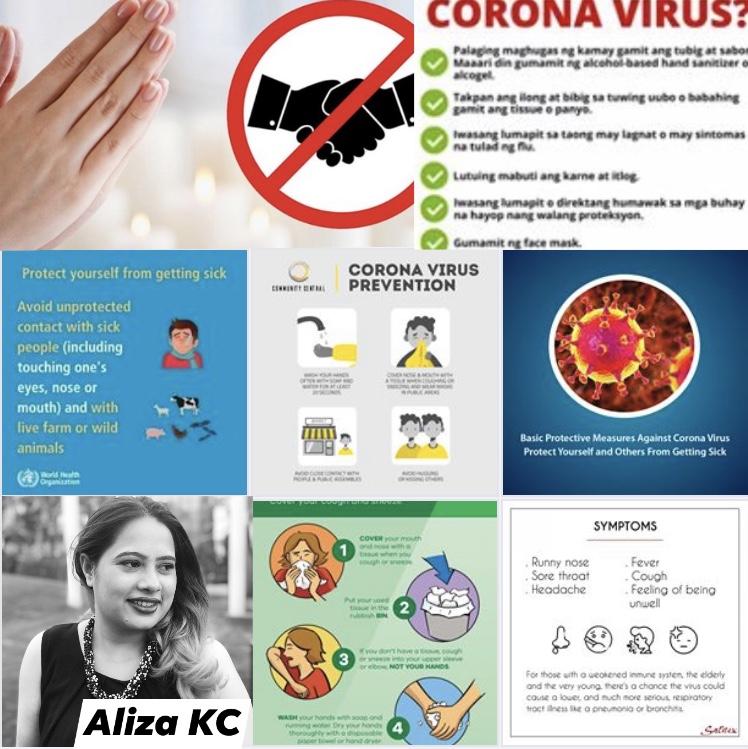
However, we can always reduce the chances of being infected or spreading COVID-19 by taking some simple preventive measures like, hand washing with soap and water thoroughly and frequently.
Washing hands regularly and avoiding unnecessary touch to the eyes, mouth and nose with unwashed hands will prevent the virus from getting into one’s nose or mouth.
You should learn proper techniques of hand washing and also teach your children to do so for a good start.
Secondly, practicing a proper cough hygiene like covering your nose and mouth with a tissue or flexed elbow while coughing could prevent the virus from getting out into the air or remain in the surfaces/objects hence, preventing others from getting the virus.
Disposing the used tissues in a closed dustbin properly and washing hands afterwards is also very important. Next thing you can do is to maintain a social distance from people especially if you are sick.
Try to say “Hello” than shaking hands, don’t touch objects or surfaces touched by many people (door handles, hand rails of trains or buses, carts of supermarkets etc.) and if touched don’t forget to wash your hands immediately.
If you have any symptoms aforementioned do seek medical care. Practice safe food hygiene, eat well cooked food and homemade food, change work clothes every day, wash hands even after caring your own pet animals, don’t travel much in the present context and if you do have to travel stay well informed about the disease condition in the place you are going to visit.
Make sure to know all immigration rules and regulations of the host country before you manage to go on a trip. Carrying a diary to keep records on where have you been and whom did you met is one way to let your physician well informed about the possible clusters if you are infected.
So, always carry a diary with you and write the details of your visits on it. If you feel any discomfort after boarding a flight let the flight attendants know about your condition as early as possible.
For the working professionals telework is the best option for this point of time but, for those who need to be physically present at their work they should be more careful.
Disinfect your work station before you begin your work, wash hands frequently and always carry a disinfectant with you if possible. Since COVID-19 is a very new disease it’s very important that you stay well informed or updated with the latest information regarding this infection.
Seek information from some trusted sources like official website of World health organization, center for disease control, ministry of health and welfare Japan or the ministry of health official websites of your home country.
Sharing wrong or misleading information on social networking sites regarding this disease may generate panic among general public so be responsible and be aware of your outrageous behavior as it may directly or indirectly harm you, your family, your society or your country.
Also, accusing each other for the disease is not an ideal thing to do. This is a pandemic affecting thousands of lives around us so we should show some generosity to those fighting with this infection.
Lastly, remember it won’t cost you anything to wash your hands cause if you don’t this might cost you lives, it could be yours or your loved ones too so, wash hands and educate your family members about the COVID-19 and its preventive measures.
Aliza K C Bhandari
Public Health Professional



.jpg)